.svg)
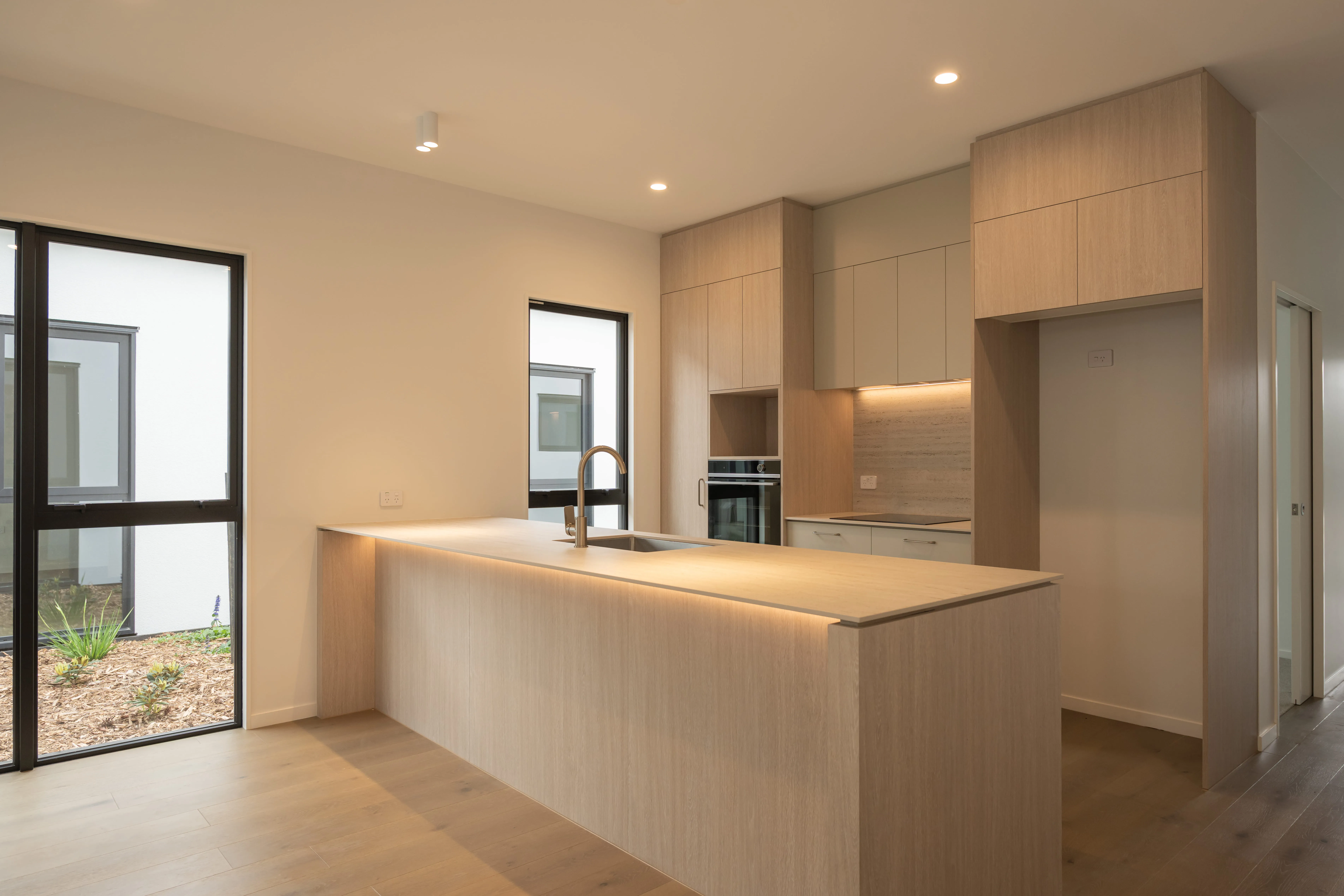
Searching for ‘cabinet makers near me’ usually means you are at the start of a kitchen renovation, a wardrobe rebuild, or a full home project, and you want someone who can be trusted with it. Christchurch has no shortage of joiners and cabinet makers, but the difference between a good result and a disappointing one usually comes down to process, not price.
This guide walks through what a custom cabinet maker actually does, the questions worth asking before you commit, what a proper design and drafting process should look like, and the red flags to watch for along the way.
What Does a Custom Cabinet Maker Actually Do
A custom cabinet maker designs and builds joinery specific to your space, rather than fitting pre-made units into a room. This covers everything from bespoke kitchens and wardrobes and dressing rooms through to laundries and mudrooms and custom furniture and timber features such as staircases and built-ins.
The appeal of custom joinery is that it is built to fit your exact space, your storage needs, and the way you actually use a room, rather than a standard size that gets adjusted to fit. That level of customisation is also why the process matters so much. A cabinet maker who skips proper design and drafting is far more likely to deliver something that does not quite work once it is installed.
Cabinet Maker, Kitchen Manufacturer, or Volume Supplier: Know the Difference
Before you start requesting quotes, it helps to know what kind of business you are actually talking to. Volume kitchen suppliers work from a limited range of standard cabinet sizes and finishes, which usually means a faster turnaround and a lower price, but less flexibility if your space or your requirements are not standard. A dedicated cabinet maker or joiner, by contrast, designs and builds joinery specific to your project from the ground up, including full residential renovations where existing spaces and older buildings need to be worked around rather than replaced wholesale.
Neither approach is automatically wrong, it depends on your project. But if you are asking for something bespoke and getting a semi-custom answer, it is worth knowing early rather than after you have signed off on a quote.
Questions to Ask Before You Hire a Cabinet Maker
A few direct questions early on will tell you far more than a glossy brochure or a low quote:
Can I see examples of similar work you have completed? Ask specifically for projects similar in scale or style to yours, not just a general portfolio. A cabinet maker with genuine experience in your type of project should be able to show it easily.
Do you produce your own design and drafting, or do you rely on someone else's plans? A proper joiner should be able to take an architect's or designer's concept and turn it into detailed, accurate technical drawings for your sign-off before anything is manufactured. If they cannot explain this step clearly, that is worth noting.
Where is the joinery actually built? Ask whether the work is manufactured in a local workshop or outsourced elsewhere. A local Christchurch workshop generally means better quality control, easier communication if something needs adjusting, and a faster turnaround if changes are required.
What happens if something does not fit on installation day? Every experienced cabinet maker has dealt with an unexpected issue on-site, whether that is an out-of-square wall or a service run in an inconvenient spot. What matters is whether they have a clear process for managing it, rather than treating it as a surprise.
What is your realistic timeline, from design sign-off to installation? Vague answers here are a warning sign. A cabinet maker who manages their own manufacturing should be able to give you a reasonably firm timeframe once your design is finalised.
Do you handle both manufacturing and installation, or subcontract one of them out? Understanding who is accountable for the finished result, from the workshop through to the final fit, matters if anything needs to be resolved after installation.
What a Proper Design and Drafting Process Looks Like
A trustworthy cabinet maker will generally follow a process similar to this:
- Initial consultation. Discussing your project, your budget, and how you actually want to use the space, not just what it should look like.
- Design and drafting. Turning your brief or your architect's plans into detailed technical drawings, so you know exactly what is being built before manufacturing starts.
- Manufacturing. Building the joinery in a dedicated workshop using proper machinery and quality materials, rather than assembling pre-made components on-site.
- Installation. A planned, professional fit-out that accounts for your home or building's specific conditions, with clear communication if anything needs to be adjusted along the way.
This is the same structure Gill Joinery follows for both residential and commercial projects, built up over many years of custom joinery work from its Christchurch workshop. If a cabinet maker cannot clearly explain their own version of this process, it is a fair sign they may not have one.
Red Flags to Watch For
A few warning signs are worth taking seriously before you commit to a cabinet maker:
- No design or drafting stage at all. If you are not shown detailed plans before manufacturing begins, you have no real way of confirming what you are getting.
- Vague or shifting timelines. A cabinet maker who cannot give you a reasonably firm estimate once your design is signed off may be juggling too many jobs, or may not manage their own manufacturing.
- Reluctance to show past work. Genuine, established cabinet makers are usually proud to show recent projects. Hesitation here is worth asking more about.
- Unusually low quotes with little detail. A quote that is significantly cheaper than others, with little breakdown of materials or process, often means corners are being cut somewhere, whether that is materials, hardware, or the level of customisation you actually thought you were getting.
- No clear point of contact once the job starts. Ask who you will actually be dealing with during manufacturing and installation. A lack of a clear answer usually means accountability will be harder to pin down if something goes wrong.
Getting Quotes: What to Compare
Once you have a shortlist, compare quotes on more than price alone. Look at what materials are specified, whether design and drafting is included or charged separately, what the manufacturing and installation timeline looks like, and whether the quote is based on an actual site measure or a rough estimate. Two quotes that look similar on price can represent very different levels of finish and service once you look closely.
Frequently Asked Questions
How much does a custom cabinet maker cost compared to a standard kitchen supplier? Custom cabinet makers typically cost more than volume kitchen suppliers, since every piece is designed and built specifically for your space rather than adapted from standard sizes. The difference in cost reflects the level of customisation, materials, and workshop time involved.
How long does it take to get custom cabinetry made in Christchurch? Timelines vary depending on the scale of the project, but most custom joinery involves an initial design and drafting stage followed by a manufacturing period in the workshop before installation. A reputable cabinet maker should be able to give you a realistic timeline once your design is finalised.
What is the difference between a joiner and a cabinet maker? The terms are often used interchangeably in New Zealand, though joinery can also cover a broader range of work, including doors, windows, staircases, and architectural timber features, alongside cabinetry.
Should I get more than one quote before choosing a cabinet maker? Yes. Comparing at least two or three quotes helps you understand what a fair price looks like for your project and highlights differences in process, materials, and included services that are not always obvious from a single quote alone.
Conclusion
Choosing a custom cabinet maker in Christchurch comes down to trusting a process, not just a price. A joiner who can show real examples of similar work, explain their design and drafting process clearly, and give you a realistic manufacturing and installation timeline is far more likely to deliver a result you are happy with for years to come.
Gill Joinery has been building bespoke kitchens, wardrobes, and custom joinery from its Christchurch workshop for many years, with an in-house design and drafting process and full manufacturing and installation handled locally from start to finish. If you are planning a kitchen, wardrobe, or full home renovation and want to talk through what is possible for your space, request a free quote and we will be in touch to discuss your project.